Singapore Visa for Indians: Requirements, Documents & Application Process
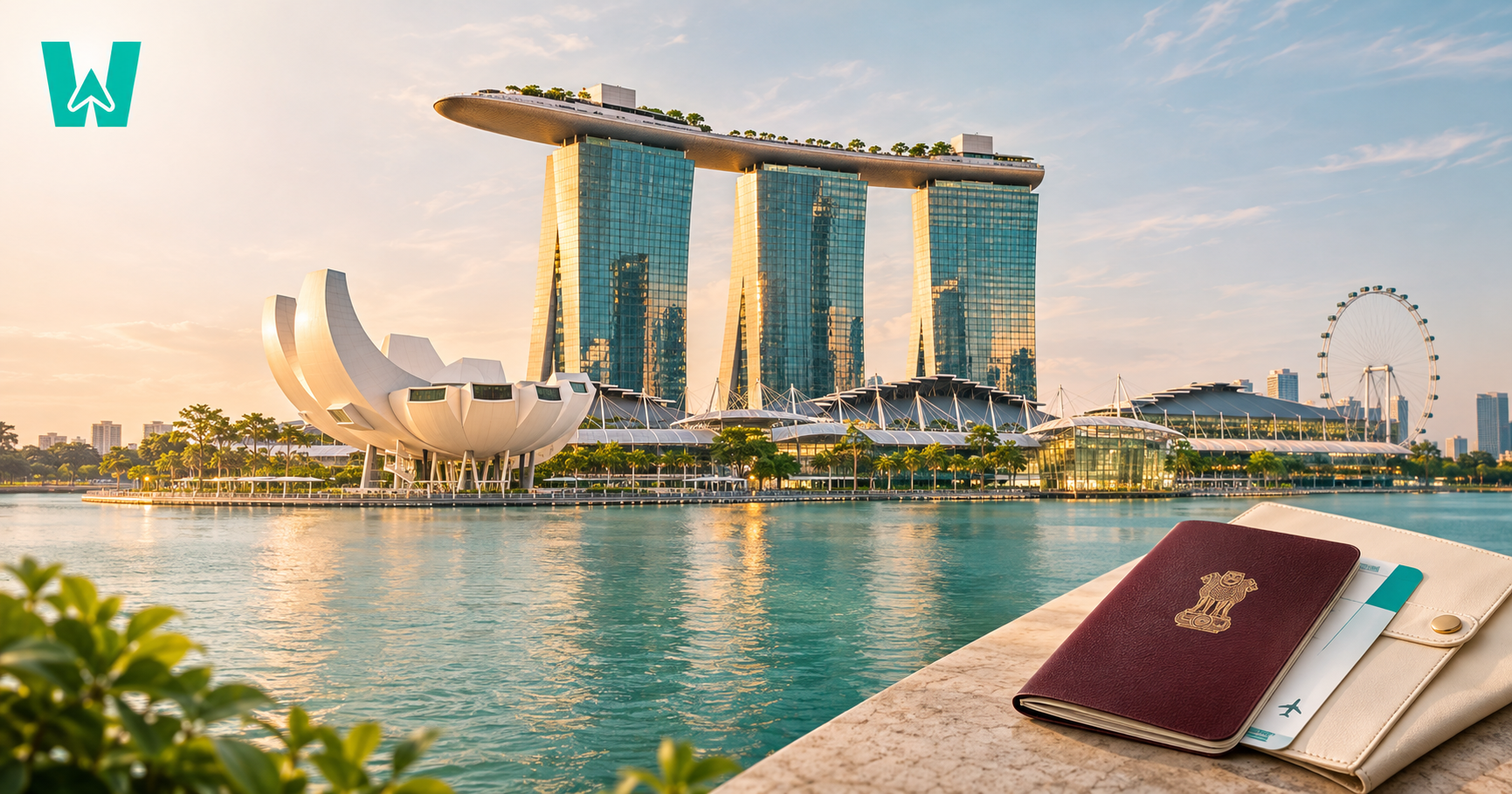
A traveller notices a problem while checking in online: their passport has less than six months left before expiry. The flights are booked, and the hotel can no longer be cancelled. Worse, the visa application hasn’t even been filed.
Your small oversight now threatens the entire trip.
Planning a Singapore visa for Indians should begin before paying for any restricted booking. This Singapore Travel Guide also highlights the visa details travellers should check before departure. Here’s the scenario: Indian citizens with ordinary passports need an entry visa. The file must meet Singapore’s current document and photograph rules; even minor inconsistencies can lead to delays.
For instance, a passport number typed incorrectly, or a hotel reservation covering only half the visit, are both red flags. Similarly, an old photograph may be enough to hold up your otherwise routine application.
There’s another matter to make a note of: a valid visa lets you travel to Singapore and request entry. But it doesn’t guarantee admission. Nor does it decide how long you may stay.
Immigration officers make that decision at the checkpoint.
Do Indian Citizens Need a Visa for Singapore?
It is compulsory for all Indian citizens travelling with ordinary Indian passports to secure a visa before entering Singapore.
Indian diplomatic, official and service passport holders are exempt under the current rules.
Most holiday applications are for social visits. The visa shows the period during which its holder may seek entry and the number of permitted journeys. This doesn’t mean that the visitor gains an automatic right to remain in Singapore until the visa expires.
Suppose a visa remains valid for two months. That doesn’t mean the traveller may stay in Singapore for two months.
The authorised stay is recorded separately in the electronic Visit Pass. This is issued after arrival. Visitors receive the e-Pass details digitally, which means the email address entered in the SG Arrival Card needs to be correct.
| The SG Arrival Card is a separate travel declaration. It isn’t a replacement for a visa.
Paying an unofficial website to complete it doesn’t improve your chance of admission. |
White Trails advises you to use Singapore’s official immigration service. Enter the same passport details shown in the visa application.
Singapore Visa Requirements for Indian Applicants
Start with a passport with at least six months of validity on the planned date of entry into Singapore.
Count from arrival, not from the date on which you submit the application.
Renewal is usually the better option if the passport falls short. Applying first and updating the passport later can create a second round of work. This is because the visa record is tied to the travel document used for the application.
The remaining Singapore visa requirements aren’t difficult, but they need to agree with one another.
An applicant should have:
- A credible reason for visiting
- An address for the stay
- Enough money to cover the trip
Note: Immigration authorities may ask for a confirmed return or onward ticket.
Files will differ from traveller to traveller. For instance, a salaried applicant staying at one hotel may present a compact set of records. A self-employed traveller visiting relatives could need host details or a Letter of Introduction.
In the end, the information should make sense without the reviewer having to guess.
Singapore Visa Documents You May Need
It is very important to have a clear idea about the documentation you need to have on you before visiting the visa application centre. Your trip plans, Singapore package, and itinerary come later.
We have laid down what you need below:
-
Passport and Biodata Page
Provide a clear copy of the passport biodata page. All characters must remain visible – from the passport number, full name and date of birth to the issue date and expiry date.
Scans taken under poor light can hide digits near the binding. Phone photographs may also introduce glare across the machine-readable area.
Open the file at full size before sending it to the visa agent.
Applicants who have recently renewed their passports should ask if there’s a need to submit copies of the old passport or previous visas. Also, don’t combine a booking made under the old passport number with a new passport without correcting the reservation.
-
Completed Form 14A
Form 14A records the applicant’s:
- Identity.
- Contact information.
- Occupation.
- Intended travel dates.
- Singapore address.
- Purpose of visit.
It also asks about previous immigration and legal matters.
Use the name exactly as it appears in the passport. Indian passports don’t always follow the first-name-and-surname pattern assumed by booking systems.
Don’t invent a surname or rearrange the name under any circumstances.
Check the passport number twice, then check it once more against the machine-readable line. Letters such as “O” and numbers such as “0” are easy to confuse. Complete the declarations honestly and sign the form where required.
-
Recent Colour Photographs
The Singapore High Commission in New Delhi currently asks for two passport-sized colour photographs. These must be taken within the previous three months.
Each photograph should measure 35 mm by 45 mm, have no border and show the full face against a plain white background. Shadows behind the head, glare on spectacles, or an unevenly exposed face may make a photograph unsuitable.
Hair shouldn’t cover the eyes or eyebrows. Spectacle frames mustn’t obscure the eyes.
A studio that handles international visa photographs may already know these prerequisites. It would still be prudent for you to check the print.
“Passport size” can mean different things at different shops.
-
Flight, Stay and Itinerary Records
Applicants don’t need to purchase an air ticket for the application. Singapore’s High Commission also warns that travellers who purchase tickets before receiving the decision bear the financial risk.
This holds whether the application fails or the granted visa doesn’t cover the intended dates.
That creates a genuine planning problem. Waiting for approval may raise fares, but buying non-refundable seats too early puts more money at risk. More expensive yet flexible reservations are often a sensible compromise.
If you do submit travel records, make it an easily understandable sequence.
The arrival date, hotel check-in, hotel check-out and departure date should line up. The itinerary should show any late-night departure clearly to explain any difference.
For a stay with family or friends, provide the correct residential address and host information. These will be requested by the agent.
-
Financial, Employment or Business Records
An agent may ask for:
- Bank statements.
- Salary slips.
- An employment letter.
- Business records.
The exact request can depend on the applicant’s profile and the purpose of travel.
It is also crucial to understand that more paperwork isn’t automatically better. For instance, a bank statement showing ordinary income and spending is good optics. A sudden large deposit with no obvious source isn’t.
Also, if another person is paying for the trip, identify the sponsor. Include the supporting records requested for that arrangement.
Employment letters should use travel dates that match Form 14A. For self-employed applicants, registration or business evidence may be relevant.
Students and children may need records connected to a parent or accompanying traveller.
-
Letter of Introduction
Form V39A, the Letter of Introduction for a Visa Application, may be requested on a case-by-case basis.
For a social visit, the local contact must be a Singapore citizen or a permanent resident aged at least 21. That contact should act for a business registered in Singapore when it’s a business visit.
Not every tourist needs this document. Ask the authorised agent what applies to the specific file.
The Singapore Visa Application Process
Applications in India are submitted through visa agents authorised by the Singapore High Commission.
The current agent list should be checked before handing over a passport copy. Or, for that matter, making any payment.
A local contact or approved strategic partner in Singapore may also submit through the relevant online service where permitted.
Here is a practical sequence:
- Check passport validity and settle the intended travel dates.
- Download the current Form 14A rather than using an old saved copy.
- Prepare the photographs and supporting records requested for the applicant’s circumstances.
- Compare names, dates and passport numbers across every document.
- Submit through an authorised agent and retain the receipt or reference number.
- Check the decision through the official status service.
- Print or save the approved e-Visa and verify every personal detail.
Applicants are advised to file within 30 days before arrival. Normal processing generally takes three to five working days. This excludes the submission date and weekends, along with public holidays.
| Don’t treat the five-day estimate as a guaranteed deadline. Some applications take longer. |
The current visa processing fee is INR 2,100, as of November 2026. It is non-refundable regardless of the result. Authorised agents may charge an extra service fee of INR 1,300. Confirm these amounts against the Singapore High Commission’s visa guidance before paying.
Why Applications Get Delayed or Rejected
Incomplete forms are one common cause. Missing signatures, outdated photographs and unreadable passport copies can also interrupt processing.
Conflicting information is harder to fix. Consider if the occupation given on Form 14A differs from the employer’s letter; the reviewer may need clarification. The same applies when the purpose of travel appears to change in the application or itinerary.
| No travel agent can guarantee approval, regardless of the language used in an advertisement. An agent’s job is to receive and submit an application through an approved channel. Singapore’s immigration authorities decide the outcome. |
The first review is worthwhile because there isn’t always a detailed explanation for refusal.
What to Do After Approval
Read the e-Visa rather than filing it away immediately. Check the name, passport number, validity period and permitted number of journeys.
Contact the submitting agent before travel if anything is wrong,
Keep the e-Visa, passport, accommodation record and tickets accessible during the journey. Immigration officers may also ask about the purpose of the visit or the money available for the stay.
Complete the SG Arrival Card within the official submission window. Use the passport connected to the visa.
If the passport is lost, damaged or replaced after approval, seek instructions before travelling.
Once admitted, check the e-Pass email for the final permitted stay and departure date. Remember that the date printed on the visa isn’t the deadline for leaving Singapore.
Plan the Paperwork Before the Bookings Become Expensive
The application itself is manageable. Problems arise when travellers leave no margin for a new photograph, a passport renewal or an extra document request.
By then, flight-change charges can cost far more than the visa.
A carefully prepared Singapore visa for Indians application doesn’t need padded bank records or a long appeal to the reviewer. It needs current forms, readable copies and details that agree from one page to the next.
At White Trails, we ask you to build the trip around those facts and use an authorised submission route. Also, leave enough time as contingency if the file takes longer than the standard estimate.